How to Spend 12 Hours in Tokyo
On my way back from Vietnam to the US, I had 12 hours in Tokyo: I arrived around 6:30 am; my flight back to Seattle departed at 6:00 pm. So how did I have fun in Tokyo on such a short trip?
The plan was simple: walk around, eat delicious food, look at some sick art, and buy cute trinkets. and yes, it was absolutely wonderful.
More on alyssaoutside:
- How to Plan a Trip to the San Juan Islands
- How to Actually Book a Washington State Ferry
- Solo Bike Trip in the San Juans
Tokyo is BIG (duh)
Let’s be clear: 12 hours in Tokyo is not enough to properly appreciate Japan, let alone Tokyo, let alone a single neighborhood. Tokyo is humongous. I felt like I saw a very very tiny portion of the gigantic ity which was perfect as an introduction. My coworker was entranced by Tokyo from a quick 4 day visit last year that he has now visited 3x in the last year.
My goal was to have a sneak peek of a full visit to the city and dip my toes into what Tokyo has to offer. I focused on the core things I like to do on city trips, without stressing of trying to tour all the main tourist things. After all, if I come back here with my boyfriend (and a Japan trip has been in the works….), I figured I would get to do all the touristy things again.
Alyssa’s Tip: Priorities, Priorities, Priorities. Focus on the things you like to do, whether it’s eating lots of yummy food, shopping, or looking at culturally significant sites. You won’t get to do everything on a time crunch, so do things that count.
Leaving Narita with just a day pack
My checked bag stayed in transit, so I headed to a short-term locker outside of the gates to store my backpack. I pulled out my “plane boredom” electronics (laptop, iPad, Nintendo Switch) so I could explore without the weight.
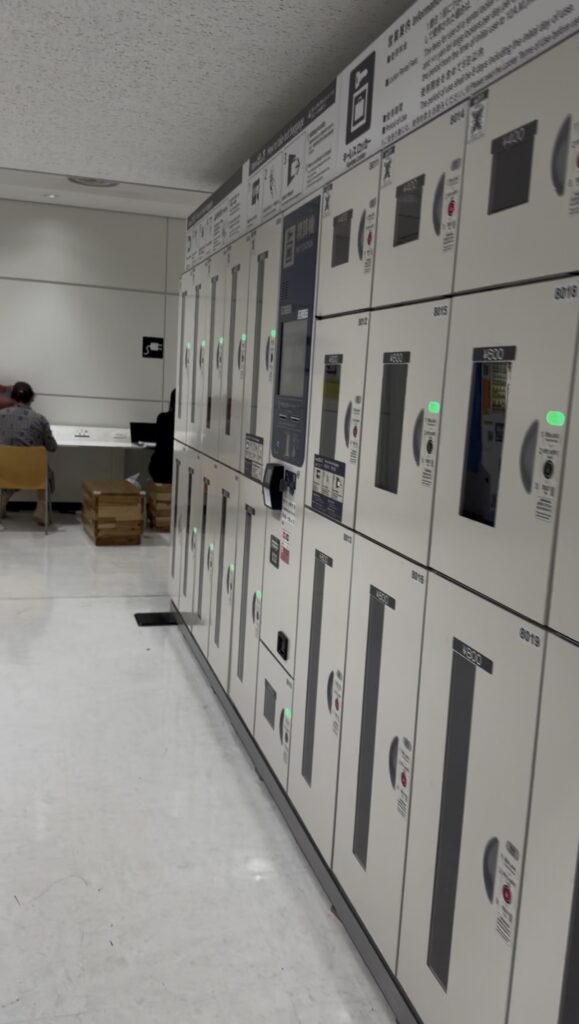
Alyssa’s Tip: Take pictures of where you store your locker, including exit number and floor. The airport is pretty uniform and remembering where you put your stuff before boarding a plane is critical.
Skyliner to Ueno
Getting into the city was faster than I expected. At 6:30 am, customs lines weren’t long and I was out of the airport in record time. I took the Narita Skyliner train to Ueno for about $24. This is a reserved seat on a proper train, not a hop-on subway like I had pictured.
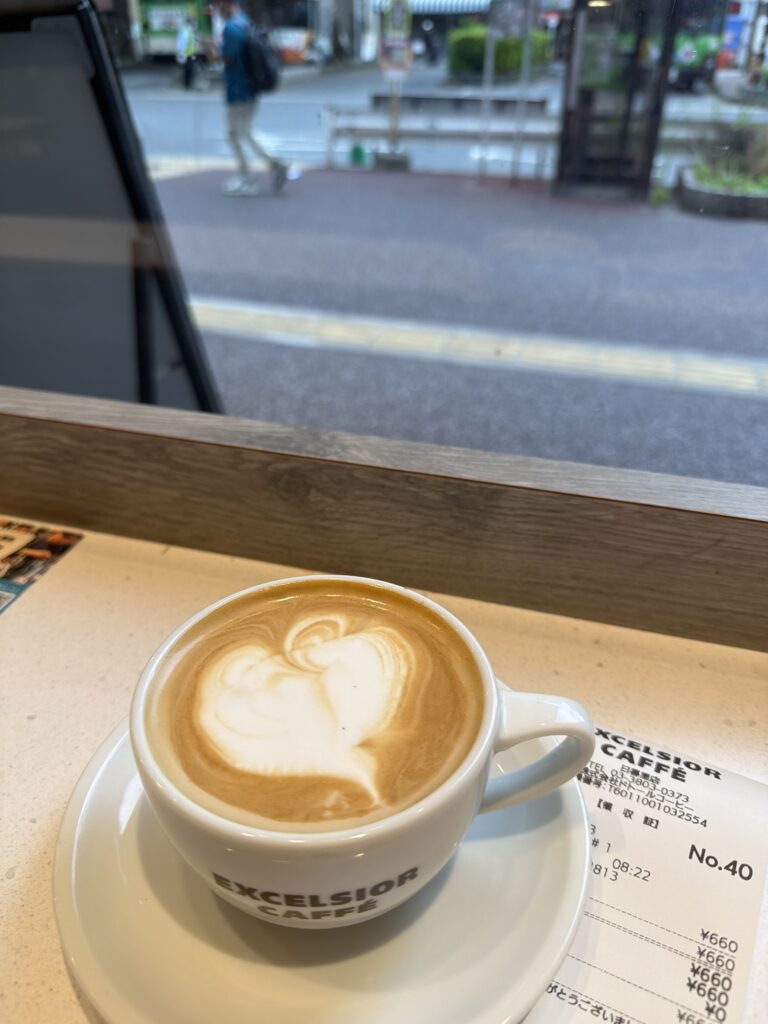
As soon as I got off the train, I grabbed a latte from a nearby cafe.
Alyssa’s Tip: Book your return trip earlier in the day. I learned the hard way that seats sell out. More on that at the end.
Morning Tokyo before the city wakes up
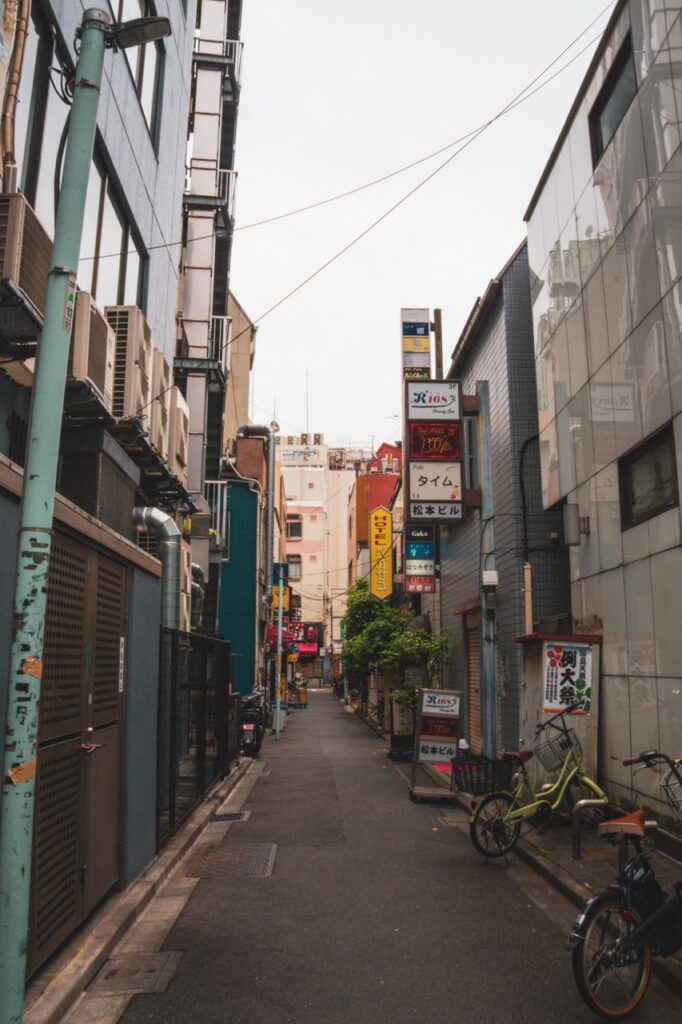
I got off one stop early on the way to Ueno (silly me), which turned into a gift. I’ve heard “get off one stop early” as health advice, but here it a chance to see quieter streets, morning runners, commuters, and almost no tourists. Everything was incredibly clean. It was peaceful to be one of the only people out.
I’ve noticed that when I travel, everything takes more brain power than my routine at home. It might take 10 real-life minutes, but walking down the street in a new place, with a new skyline, different traffic, and an unfamiliar language makes me feel like I have been walking an eternity. A twenty-minute walk becomes an hour of wonder: street signs, crossing signals, cobbled and uncobbled streetways. I couldn’t accurately tell how long my walk toward Ueno Park took, as I was admiring what the world built when I wasn’t looking. Making wrong turns when I travel is par for the course; checking out side streets are not out of the question. It could have been an hour or ten minutes. My eyes were huge in this strange land.
Running on fumes (and spaced-out coffee)
As magical as I made everything I sound, I did in fact start the day at Starbucks in Ueno park. I picked up another coffee right outside the train station at an actual Japanese coffee place, but by the time I made it inside the Ueno park station after my walk of unknown length, I needed a bathroom; this particular bathroom happened to sell coffee.
As one can imagine, I did not sleep well on my six-hour coach ride from Hanoi, so I was running on fumes. For my 12 hours in Tokyo, like any great traveller, my survival plan was regular caffeine breaks.
Alyssa’s Tip: There are coffee shops nearly everywhere, but keep in mind the menu is not your local cafe’s menu. When in Rome (and Tokyo), I always suggest getting the most popular thing on the menu to expand your tastes.
I flew to Japan to see an American painter
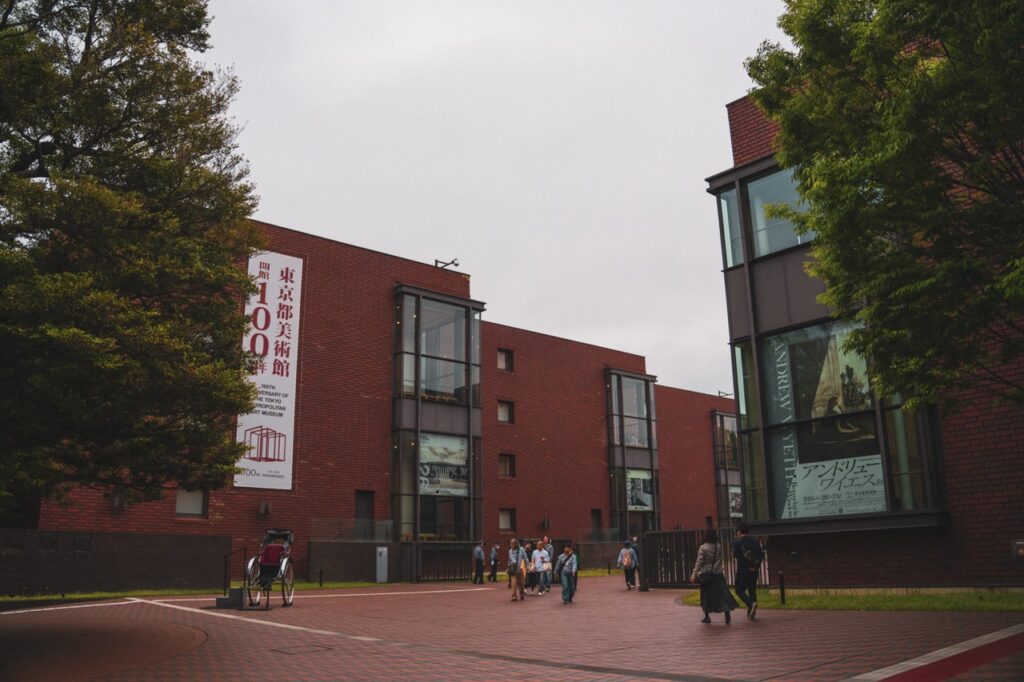
I headed to the Tokyo Metropolitan Art Museum for the Andrew Wyeth exhibit. The museum does not have permanent exhibits, only rotating ones, besides their citizens exhibit. I didn’t realize that until the ticket booth, and at that point I was committed. Ironically, I had flown ten hours from home to see an American watercolor painter. I had wanted Japanese art. Oh well. Til next time.
(The art was really cool, and I realized I had seen some of it in my watercolor painting class the year before. )
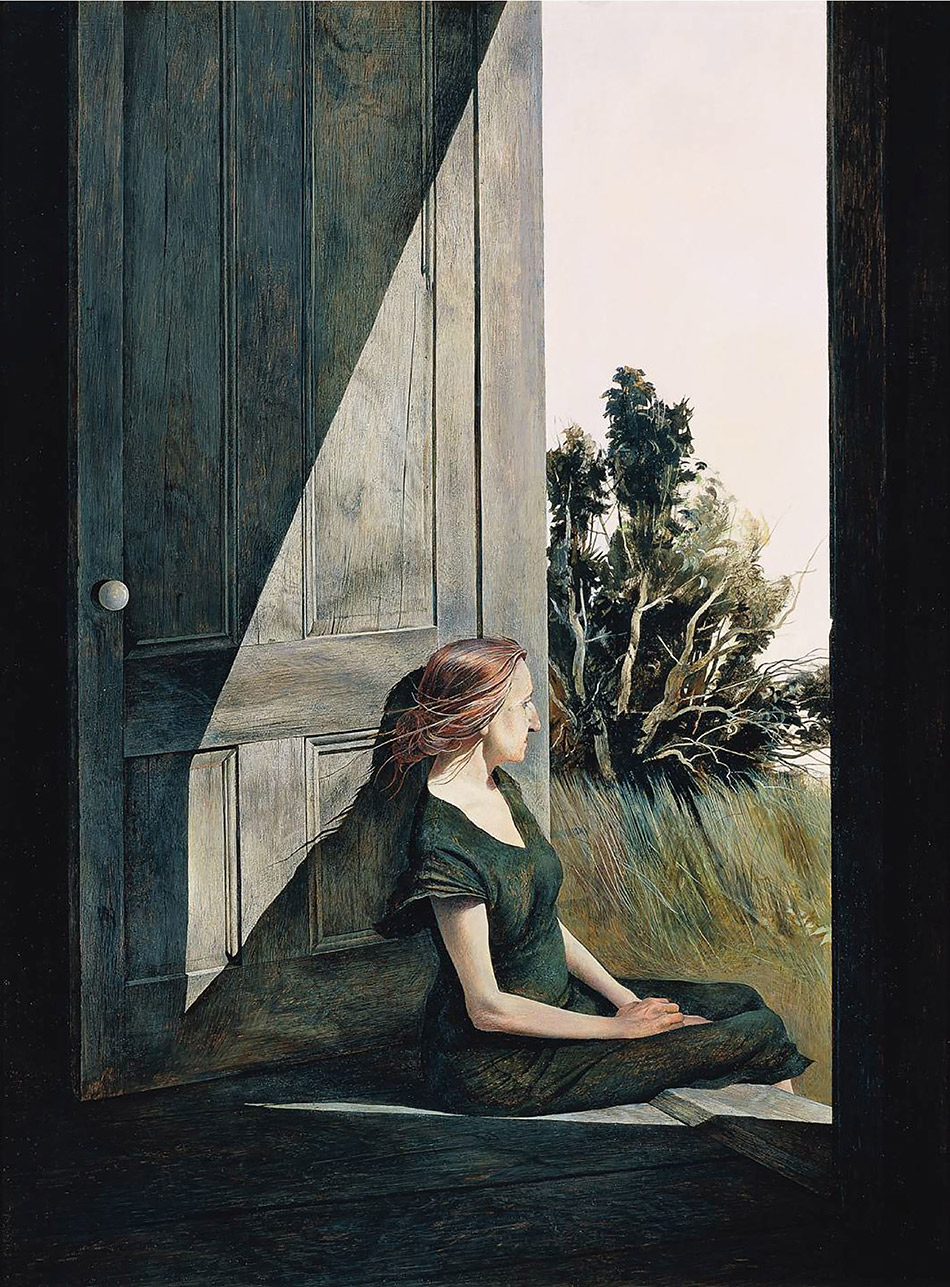
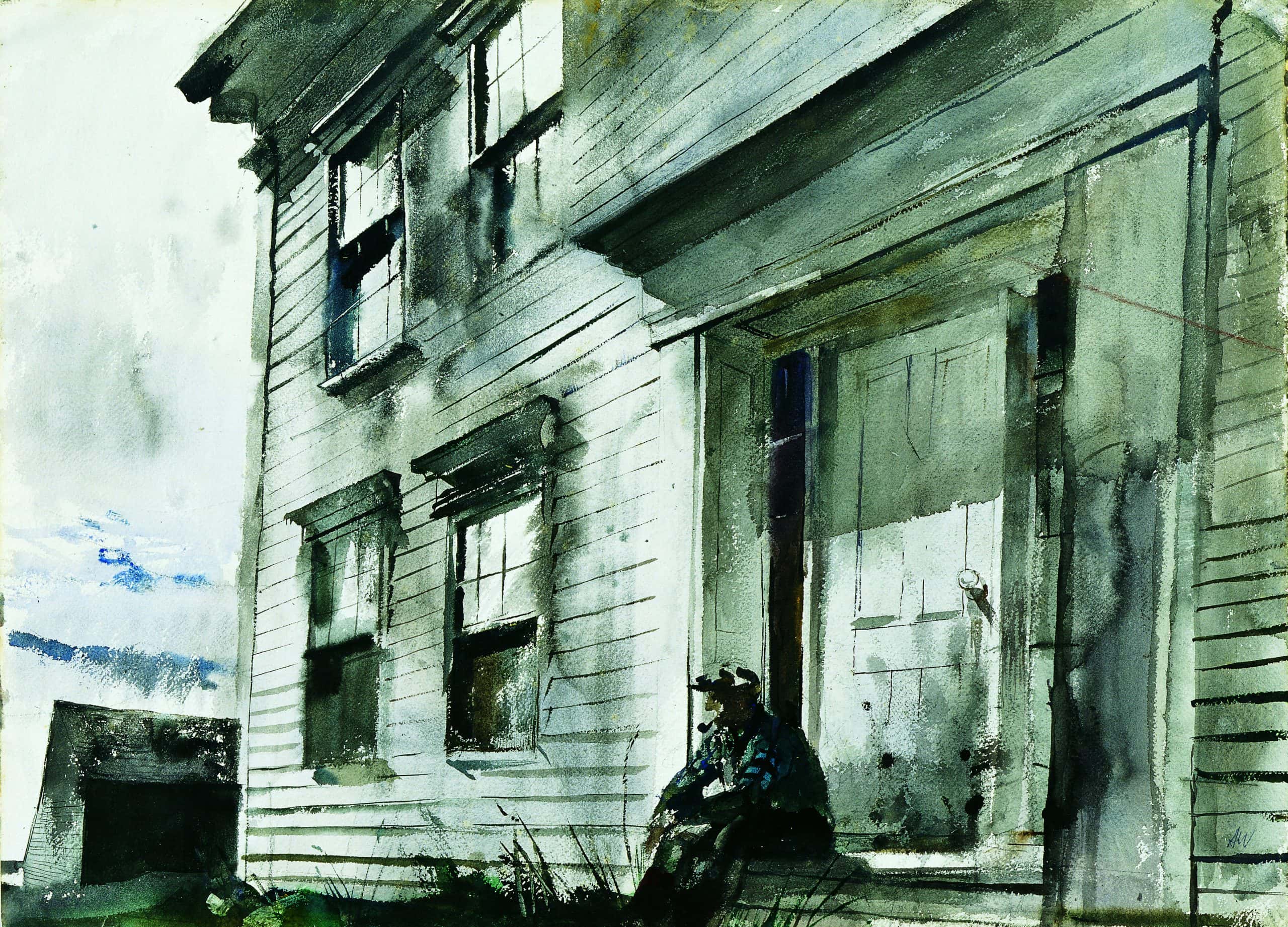
For this museum experience, I remember looking at each painting, reading about Wyeth, trying to piece together the home life that inspired him to paint the same subjects with so much variation. I felt inspired to draw the same subject over and over with a different perspective. Mr. Wyeth made many different versions of this house: palette, angle, size of the house, whether the house was even the central part of the image. Painting many versions of the same thing allows you to notice and focus on a new element, uncovering a little bit more of the truth of your relationship with the object. (Maybe birds are my Andrew Wyeth house?)
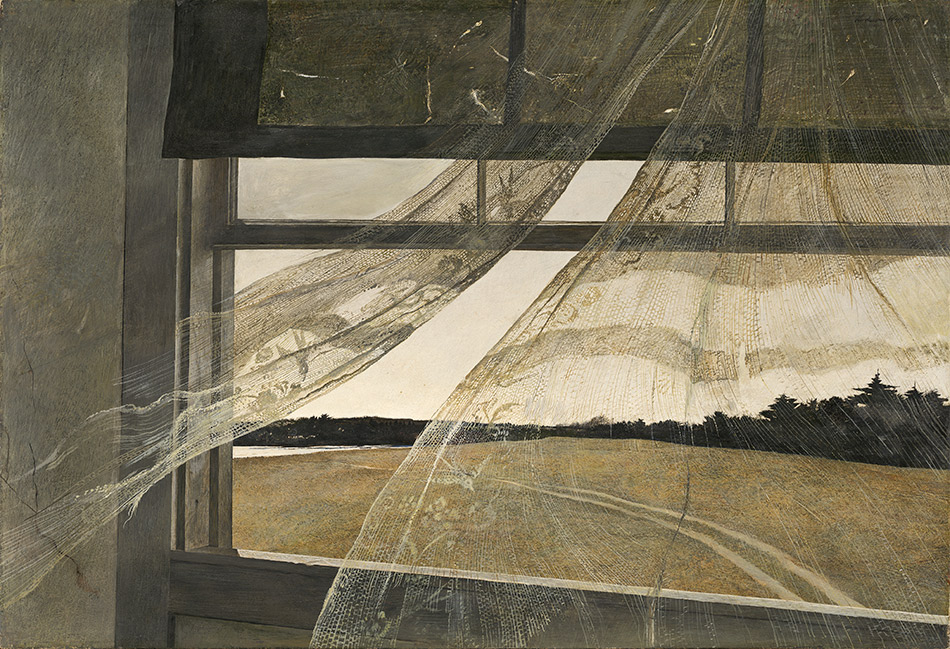
A museum with no phones
I have never seen a museum, besides the Louvre in summertime, be so packed. This was a Wednesday morning around 9 am, and this gallery was a river of people shoulder to shoulder. The key thing: You were not allowed to bring your phone in. Lots of people were inside, pausing at each painting, to gaze at it. To really take it in.
It floored me. Whenever I go to museums, it often feels like half the point is to take a picture of the painting, capturing the feeling of being a person who can experience art, not experiencing the art. Here, hundreds of people had lined up before the exhibit opened to be among the first to see it. To stare at the Maine and Pennsylvania houses Andrew Wyeth had painted.
Phones and Memory
When I go to art museums, especially the Louvre or British National Gallery or the MoMA, there are so many people that just go up to a particular painting, and take a pic (I am guilty of this). It is a troubling feeling, because you know you are part of this problem, of wanting to certify that you got to view this amazing piece of art in person. When you see important works, especially the pieces that you were taught were great in the second grade, you need to take a little piece with you. If you only get to see this art for a moment, you try your best capture a piece of this greatness, so that it may rub off on you.
Perhaps, one day someone will ask you about it, or your child will wonder if you got to see this grand art, and you will get to say yes, and show them a photo. You get to impart a little bit of that greatness onto them.
I wonder how memory and the idea of capturing something changes the way we view it. When I can rely on my phone’s camera as the mechanism for remembering, I worry less about remembering. It has been handed off as one less thing to carry.
Alyssa’s Tip: Check out the exhibits before you select your museum. The name of the museum does not always mean it will be exactly what you are looking for.
Ueno Park: temples, holiday crowds, and little markets
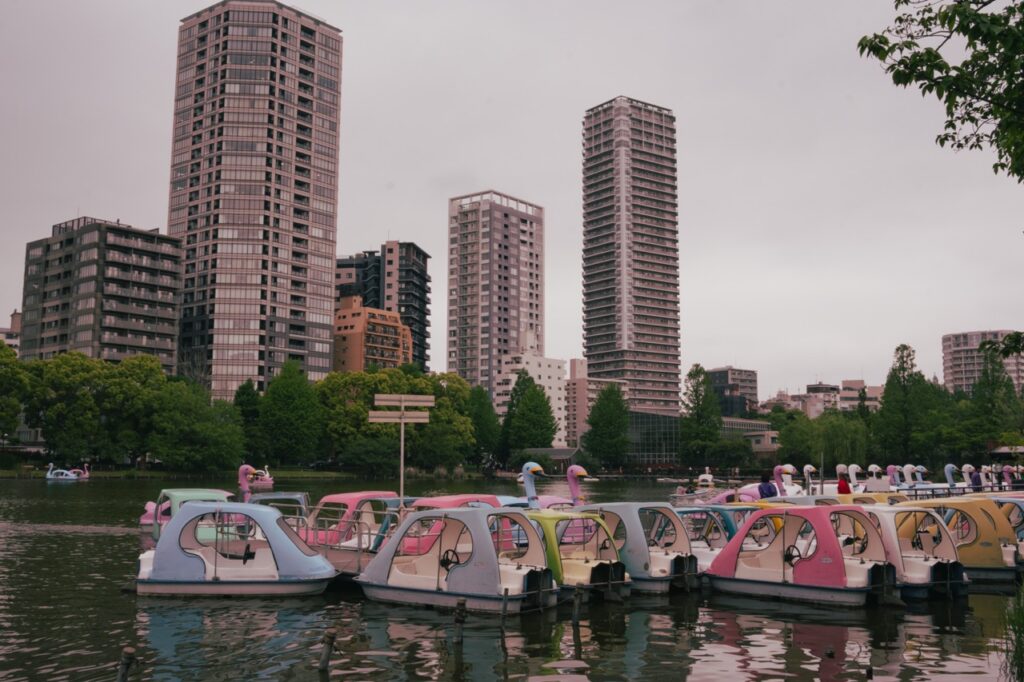
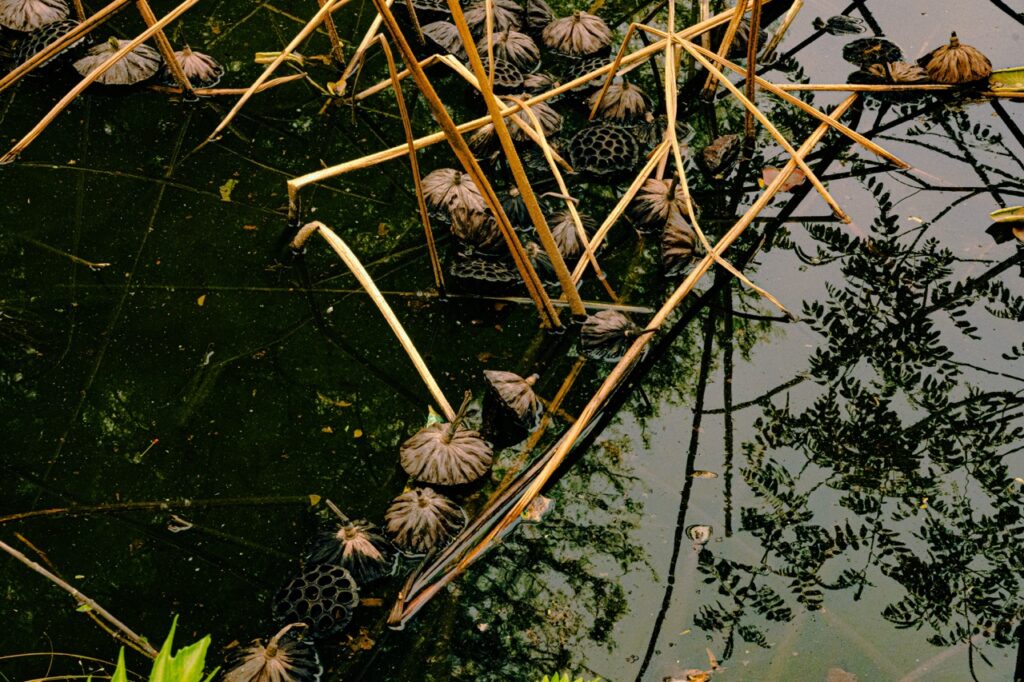
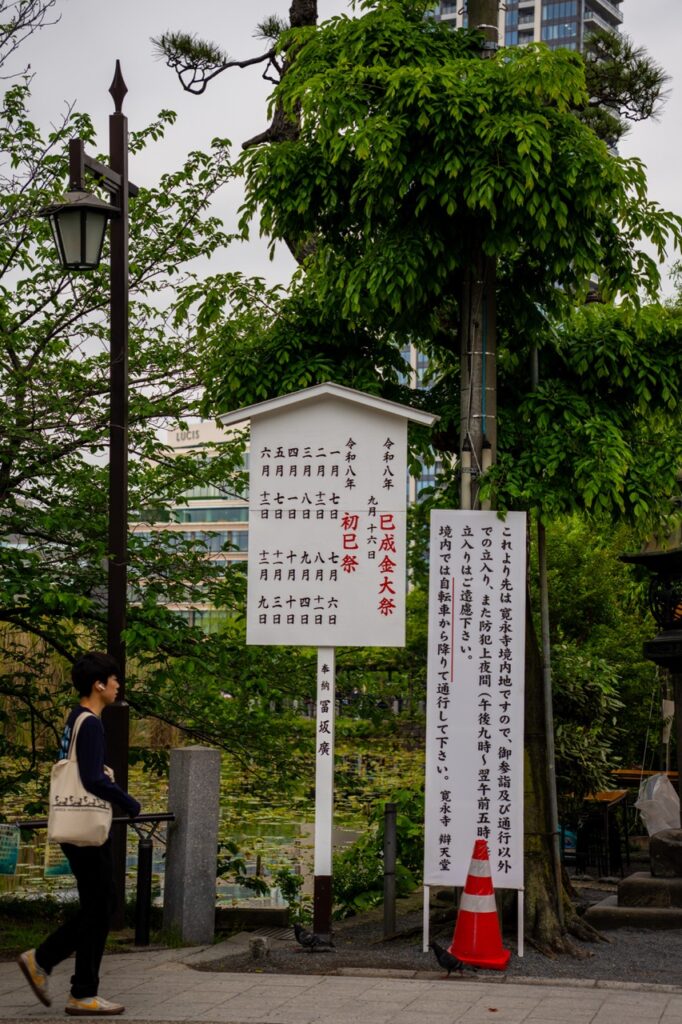
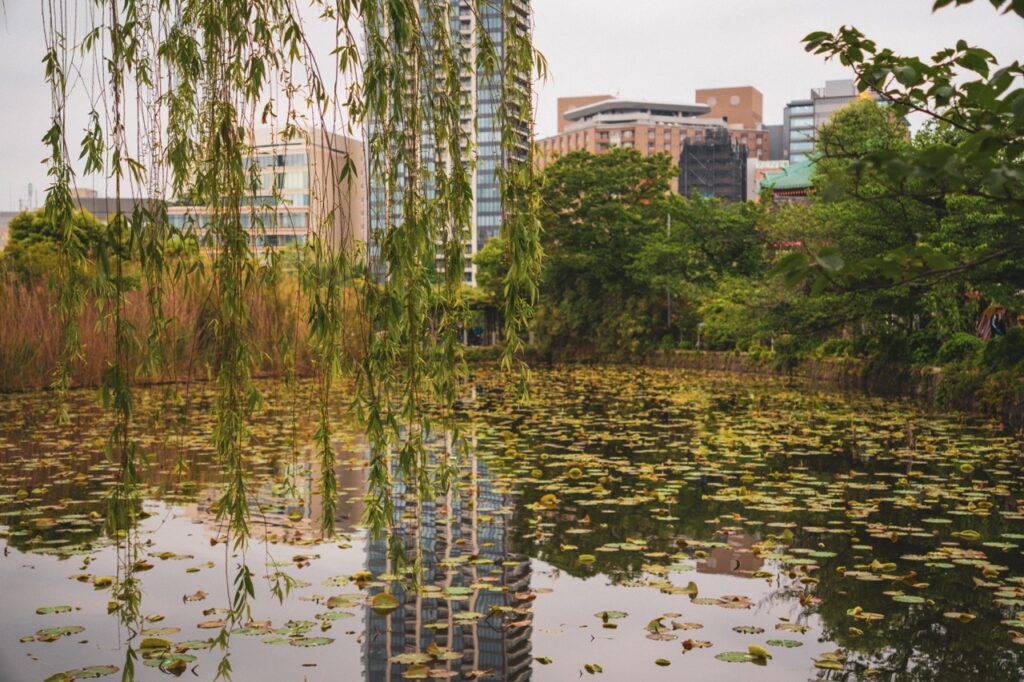
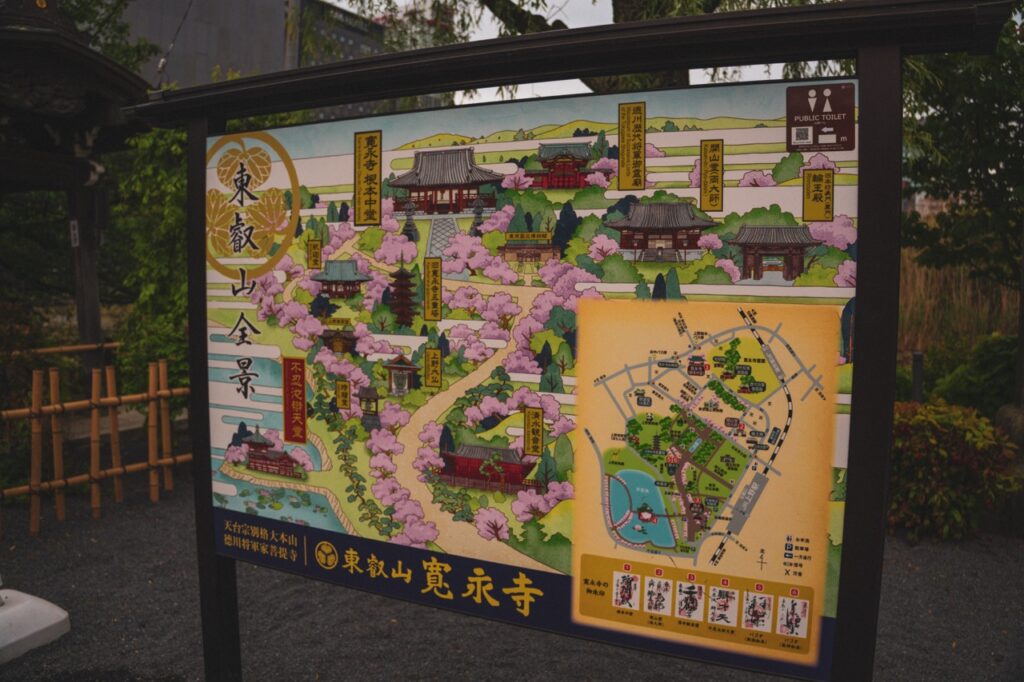
After the museum, I walked through Ueno Park, old temple, plants, a huge green space full of people enjoying the holiday (April 29th is a holiday in Japan). I was people watching, seeing tourists just like me wandering around the park. Some people were alone, some were in groups. Lots of photographers and artists.
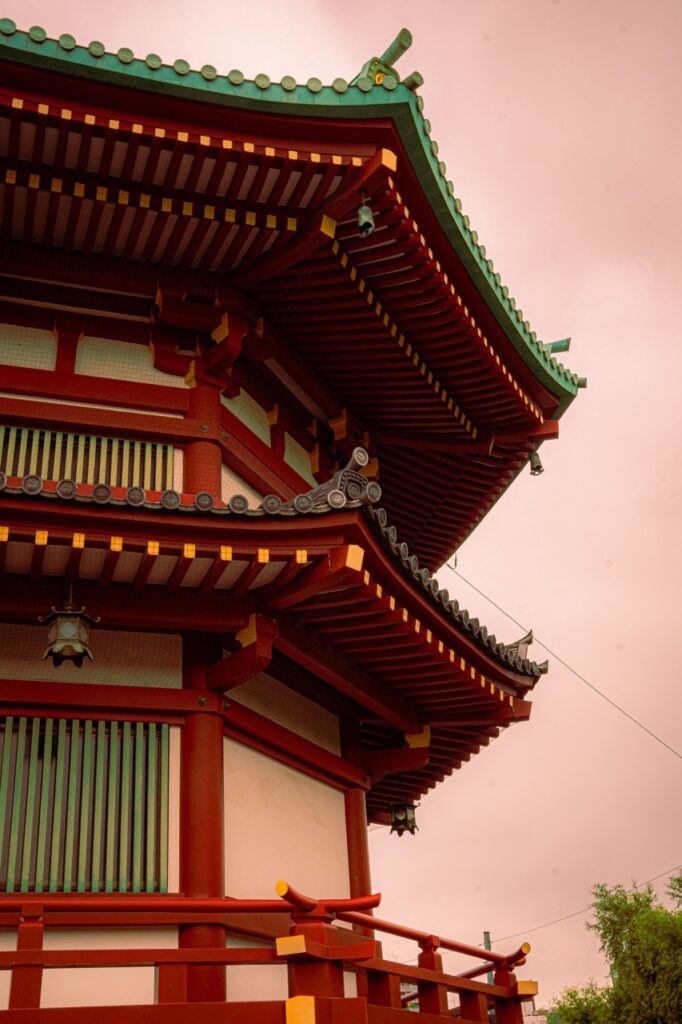
Next to the temple, there were little markets and tents popped up with food and tchotchkes. At this point, I had ramen and a vision of a chair in my head, so I left the park to go search for my meal.
Ramen when you don’t know the system
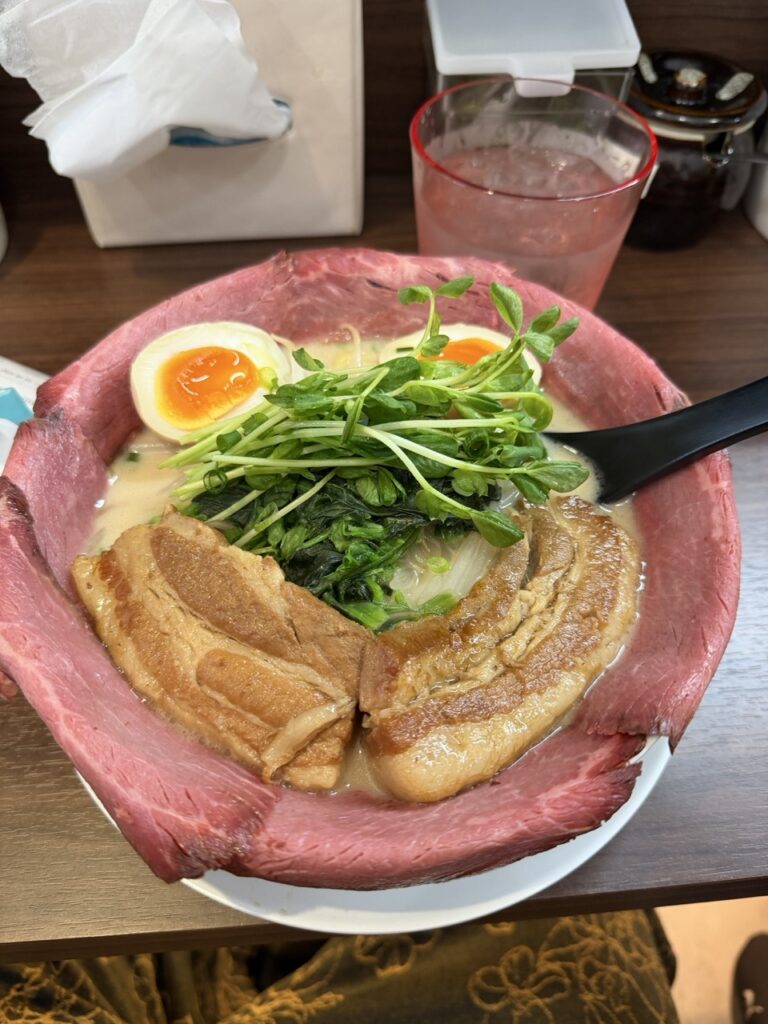
By noon, I was extremely hungry. All I wanted was a place to rest my legs as I figured out what to do the rest of my day. I picked a ramen place on the map based on Google Maps rating, and then was on my way. Since Tokyo was so cool, however, it became a battle between taking photos of buildings and eating, and not eating started to push my body’s boundaries a bit too far. Pausing my sightseeing, I ended up skipping the original one, as I got so distracted with my street photography. Except, ordering ramen was a lot more complicated than I realized.
I did not understand how ramen places worked in Japan. I was expecting a normal USA restaurant where you order at the front, or even use a kiosk, then sit down left to your own devices. In this ramen place, I had discovered ramen vending machine: You physically press a button on a vending machine, select your bowl by picking a photo of your bowl, pay, sit at the bar, slurp in peace. The bar was directly in front of the chefs, and all the patrons were sitting right up against the bar, so the whole thing felt very intimate.
After my ramen, which did look like a face, I felt human again.
Japan vs. the USA: design density on every sign
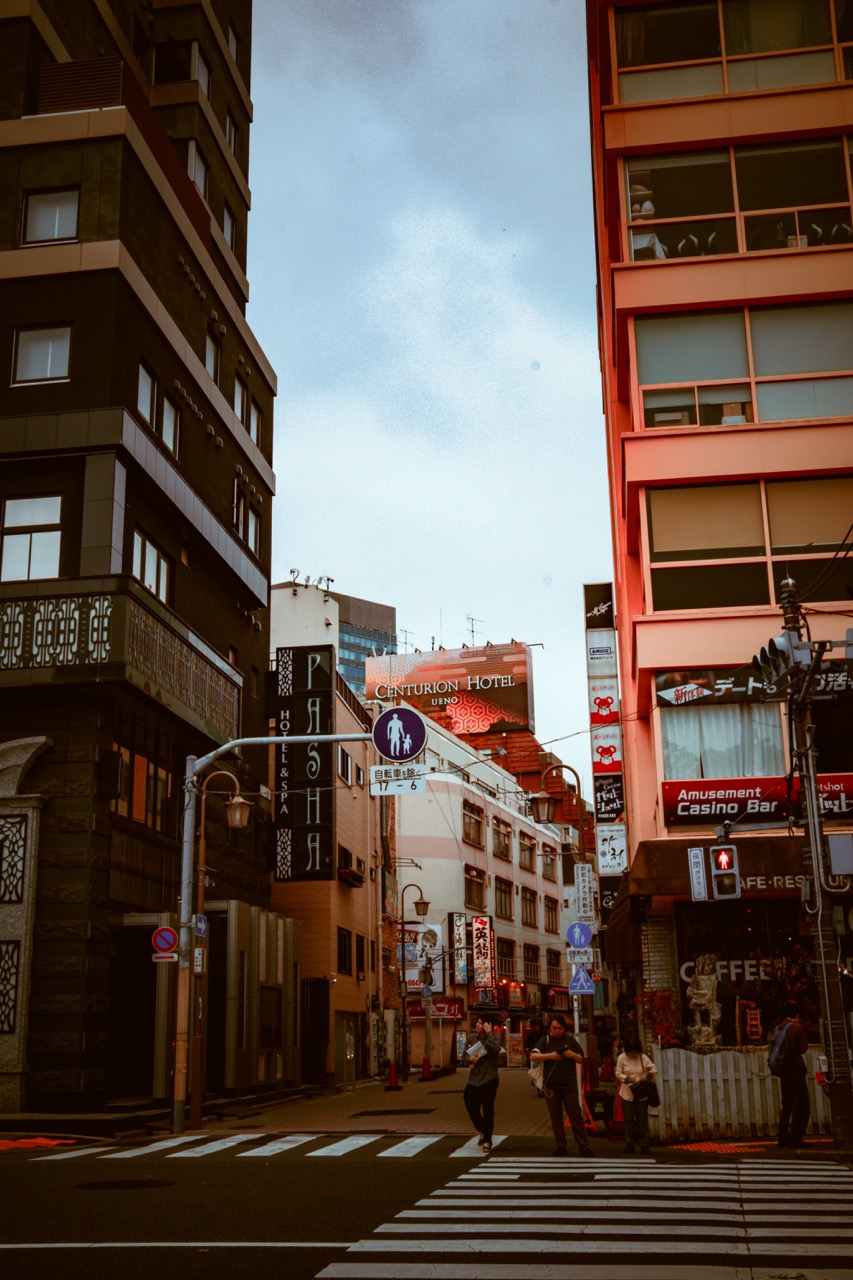
I couldn’t find my portable charger and was running out of juice, so I walked into a local electronics store. What struck me most between Japan and the USA was design density on advertisements. When the US went toward classic minimal Steve Jobs style, Japan kept color and fun. The ads felt a little chaotic, but clearly acceptable, and packed with information. If only I could read them.
This is one of those moments where doing things in another country takes 10x longer. I spent forever debating which portable charger to buy.
Kawaii on everything (even your charger box)
The other thing Japan taught me: make everything cute at every opportunity. I loved the smiley-face sticker on my portable charger box so much that back home I started adding stickers to things.
Postcards, claw machines
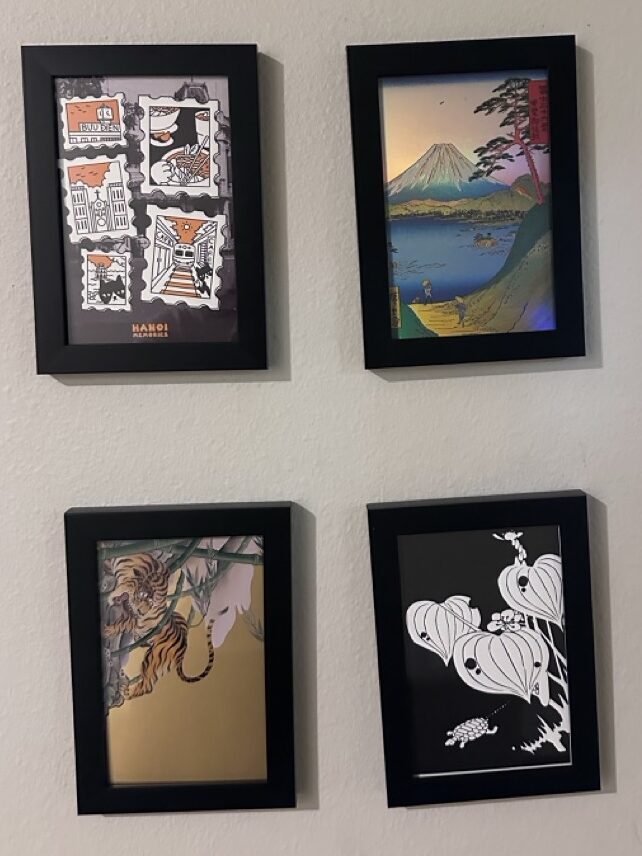
I meandered around the Ueno district shopping, hunting for postcards, little waving cats, and magnets. The shopping trip ended with great success: I found some beautiful postcards with more artsy designs than just classic photos of various cultural sites in Japan. I ended up hanging a few on the wall instead of sending them. My personal postcard philosophy is that they are little art prints, not just letters. Although I do usually try to send out a few postcards per trip, I didn’t send any this time, alas. No time to find a stamp and postbox when I was locked in on wandering around.
What really impressed me, enough to hit an ATM to grab cash, was a yellow arcade full of claw games. Insert coins, grab a random cute trinket. Every time I tried to look away, it caught my eye again. I found myself coming back up the street so I can fully check out the arcade, and identify which item I wanted to buy. It was a store full of these little claw machine tchotchkes. It felt like the perfect tourist souvenir for a child, and adult Alyssa. I got a little stuffed animal.
Muji Time
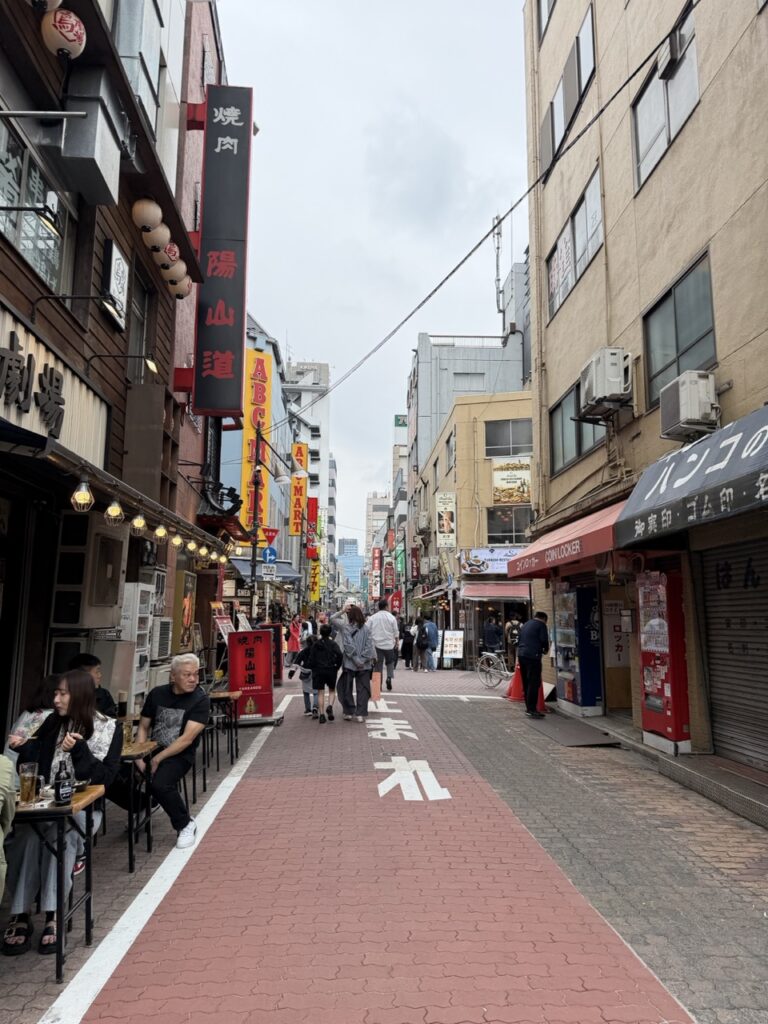
Then Muji. I’d been before, in Dublin, and went in for notebooks and stationery. It was the same reason why I was back. This time I got distracted by cute clothing and left with a comfortable cute gray dress, bright yellow socks, and a lovely green shirt for my boyfriend. I spent a long time admiring all the different items; there was a certain level of simplicity and comfort to every item, yet that was still stylish. Given that Muji also has a lot of homegoods, it feels like toned down IKEA, where every item in the store feels engineered for a particular purpose. If I had more room for me in my bags, I certainly would have bought a lot more items. Like, am I missing out on not having Muji detergent? Would my life be better?
Alyssa’s Tip: Whenever you shop anywhere abroad, keep in mind a few main items that you like to buy. I like to buy a postcard, magnet, and a relevant tchotchke as needed. It keeps you focused on what you actually want/need.
Taiyaki ice cream as a last bite of Tokyo
After shopping I got one of those waffle ice creams shaped like a fish. Delicious. A great way to wrap up the city part of the day.
Alyssa’s Tip: There are not a lot of public trash cans in Tokyo. If you see a trash can, make sure to throw away your trash. I held the remnants of my ice cream all the way to airport security, an hour after I originally intended to throw it out.
The race back to Narita
Then came the most stressful part.
I hadn’t fully processed that the Skyliner is a reserved-seat train, not the Seattle Link or NYC Metro, where you hop on and hope for a seat. (this is why I explicitly call it out above). Narita is about an hour from where I was in Tokyo. When I finished my ice cream it was around 2:20 pm. I expected a train in twenty or thirty minutes. Instead, seats were sold out for over an hour. The soonest I could board was 3:45 pm, arriving at the airport around 4:35 for my 6:00 pm flight.
Thank God I had chosen to head back nearly an hour earlier than I originally planned, or I would have been completely screwed and probably paying for a taxi.
I paced for an hour: Oh my god, I have to get on this train. I probably freaked out lots of people also waiting for the train. There are not a lot of benches in this area, so I was left to pace and get my anxious energy out. Luckily, Tokyo’s trains are famously efficient. When I finally got to Narita I ran in, grabbed my locker stuff, and sailed through security and immigration with 20 minutes to spare. I wish I had gracefully enjoyed my hour in Tokyo instead of pacing like a madwoman.
That was my 12 hours in Tokyo.
Would I do it again?
Duh!
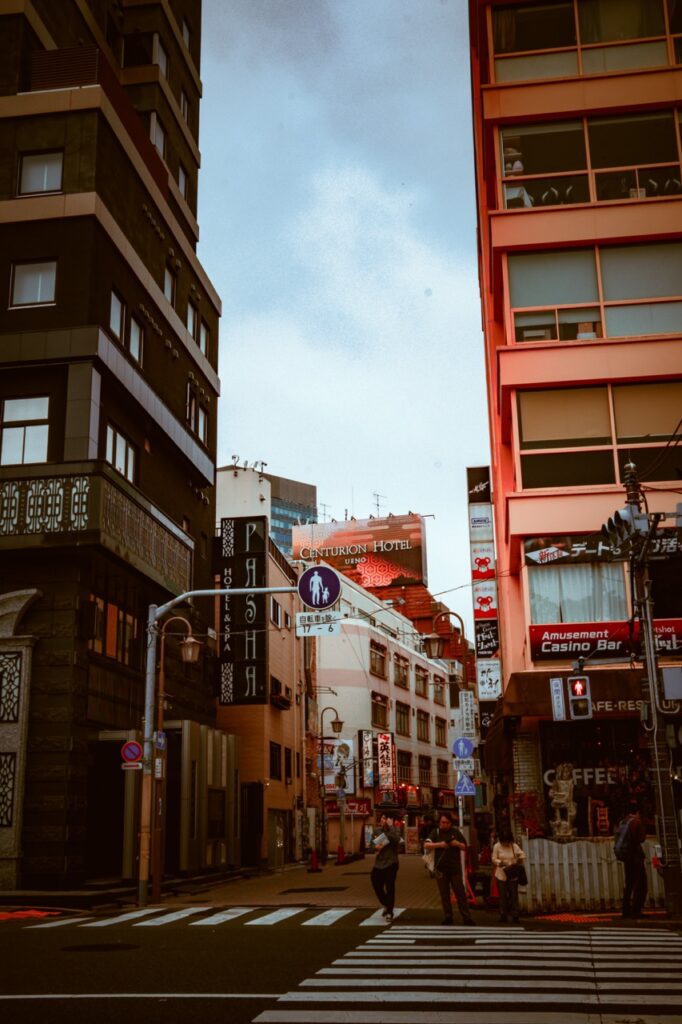
Yes, but I’d book the return Skyliner before I ate taiyaki, and I’d come back with more than a layover. Tokyo deserved more than a teaser. Next time: Japanese art on purpose, stamps for the postcards, and sleep.
More from alyssaoutside
- How to Plan a Trip to the San Juan Islands — Orcas, Lopez, or San Juan Island: which island fits your vibe
- How to Actually Book a Washington State Ferry — booking windows, Anacortes tips, step-by-step screenshots
- Solo Bike Trip in the San Juans — Friday Harbor loop, winery, sculpture park, sunset chowder
Separate post coming: Narita layover guide (lockers, trains, timing, and what I’d do differently).